01 Industry Reshuffle
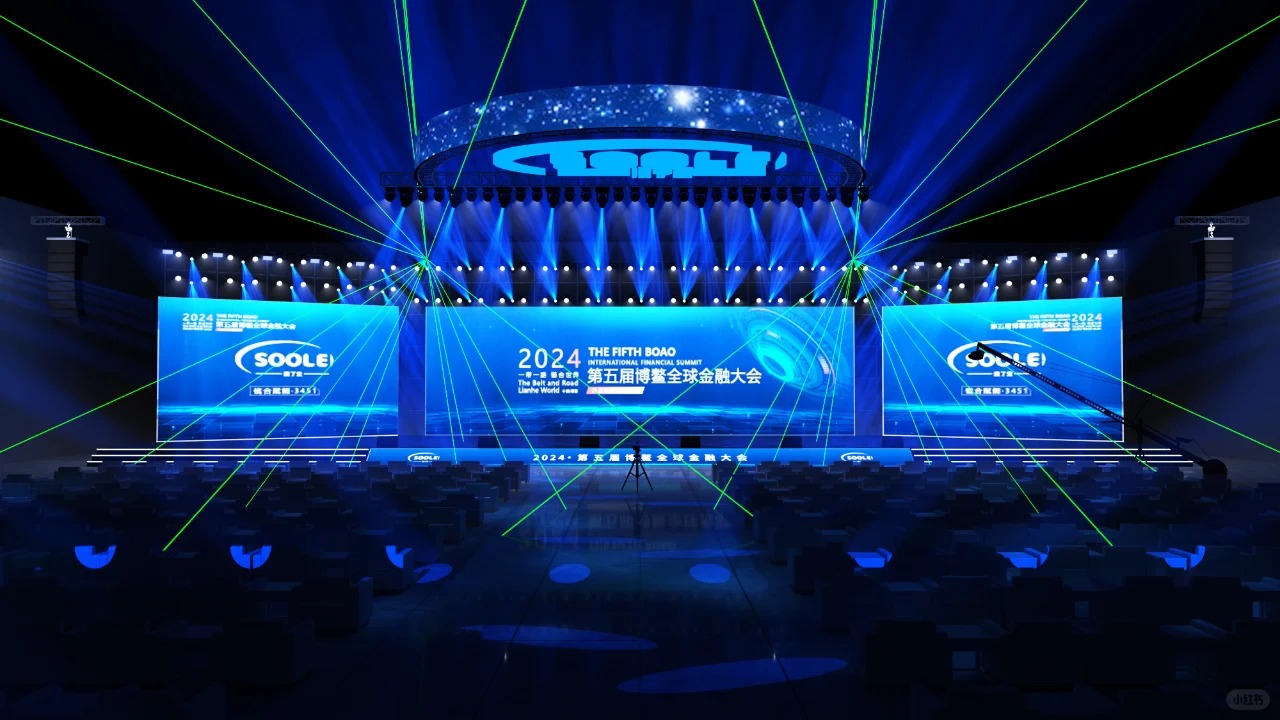
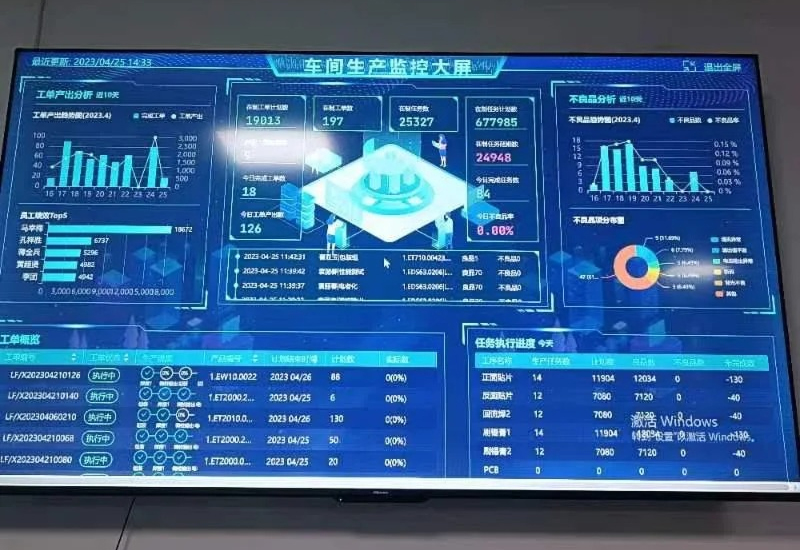
The most notable feature of the LED industry in 2025 is the accelerated integration of the industry chain, with the competitive landscape undergoing fundamental changes. Panel giants are comprehensively entering the LED display field with advantages in capital, technology, and management, completely altering the industry ecosystem. TCL CSOT invested 490 million yuan to acquire Zhaoyuan Optoelectronics, instantlythe vertical industry chain from chips to displays. At the same time, multiple Mini/Micro LED projects from BOE HC SemiTek and Jingxin Technology achieved mass production. This shift introduces the refined manufacturing standards of the semiconductor industry into the LED field, greatly promoting the maturity and cost reduction of advanced packaging technologies like COB. Enterprises with integrated capabilities across the entire industry chain will hold an absolute advantage in future market competition.

02 AR Starting Year
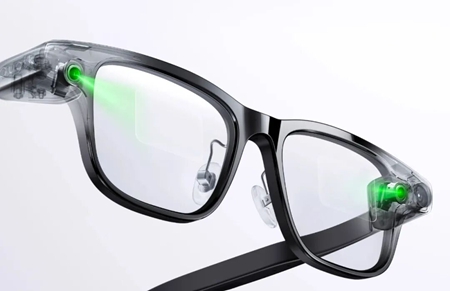
2025 is considered the first year of technological application for Micro LED AR glasses, with about 20 companies launching new AR glasses products using this technology. From LeiNiao Innovation and Leyard to Alibaba and Lenovo,industry product launches and capital activities reflect the high recognition of Micro LED as the best display solution for AR glasses. The capital market is equally enthusiastic, with companies like JBD and LeiNiao Innovation receiving over 1 billion yuan in financing, and Goertek completing a major acquisition of Micro LED technology company Plessey. High brightness and miniaturization characteristics make Micro LED one of the key technologies driving the maturity of AR glasses products.
03 Picture Quality Innovation
RGB-Mini LED backlight technology experienced an explosion in 2025, with consumer electronics brands simultaneously launching multiple flagship TVs equipped with this technology.
The RGB-Mini LED backlight technology promoted by brands like Hisense, TCL, Samsung, and has redefined the picture quality ceiling for high-end LCD TVs, with its wide color gamut performance and color even comparable to OLED.
This technological innovation proves that Mini LED is evolving towards finer and more extreme directions, building a highly competitive moat for high-end LCD TVs and becoming a key technological path for brand differentiation.
04 Wearable Breakthrough
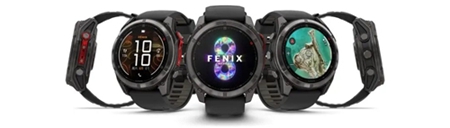
The smart wearable field achieved a milestone product breakthrough in 2025, with the world's first smartwatch equipped with a Micro LED screen officially released and launched by Garmin. This smartwatch, with screens supplied by AUO, Micro LED technology's ultra-low power consumption, high brightness, and extreme thinness, solves the endurance and display pain points of outdoor sports watches. The commercial launch of Garmin's watch not only proves the application capability of Micro LED in small-sized wearable devices but also indicates that the penetration rate of this technology in wearable devices will see significant growth in the next three to five years.
05 Cinema Revolution
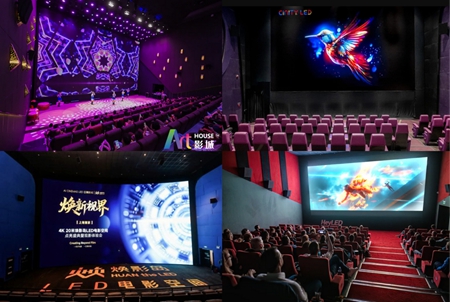
The penetration speed of LED cinema screens in the cinema market far exceeded industry expectations in 2025. Approximately 82 new LED cinema halls were completed domestically, setting a new record. Solutions like CINITY LED system from China Film Science and Technology, VLED from China Film Guangfeng, and Huanying Island from Leyard continued to be implemented, promoting the film industry's pursuit of high-quality visual experiences. For LED companies, the cinema screen market is not only an incremental blue ocean but also a test stone for brand and technological standardization. Successfully entering this market means a company's display quality and reliability have received strict industry endorsement.
06 Technological Cross-Border Against the backdrop of explosive growth in AI computing power demand, Micro LED-based optical interconnection technology has become a new choice for data transmission between data centers and chips, marking the crossover of LED technology from display lighting to the semiconductor communication field. Domestic LED chip giants like Zhaochi, Sanan, and Qianzhao have laid out in the optical communication track, with Dongshan Precision investing nearly 6 billion yuan in this technology. TSMC announced cooperation with Avicena to produce Micro LED optical interconnection products, and Microsoft launched the Micro LED optical communication technology MOSAIC. For LED companies, this is not only an extension of the product line but also an important process of transitioning from traditional manufacturing to high-end semiconductor communication industry.
07 Automotive Rise
In 2025, a series of were staged in the automotive lighting field. Sanan Optoelectronics proposed a $230 million acquisition of international giant Lumileds, while Debao Lighting acquired a 51% stake in Jiali Shares, changing the global competitive landscape of automotive LED lighting.
Against the backdrop of sluggish traditional market demand, automotive LEDs have become a key driver for the performance growth of LED companies. Companies like Hongli, Jingke, Jingneng have continued to achieve good results in automotive business.
With the continuous popularization of new energy vehicles and the penetration of advanced technologies like intelligent headlights, Mini LED taillights, and interactive displays, the automotive LED market will gradually expand. In the future, companies with vertical integration capabilities and global patent will gain more initiative in the automotive LED market.
08 Packaging Evolution
MIP packaging technology experienced rapid development in 2025. NationStar promoted the panelization of MIP, Kinglight Jingtai continuously reduced MIP costs, and screen manufacturers like Unilumin, Leyard, and Ledman also intensively released new MIP products.
Production capacity was further expanded. BOE HC SemiTek's Micro LED factory officially delivered MPD products, and Xinju Semiconductor launched a 50,000 KK Micro LED MIP R&D and production project.
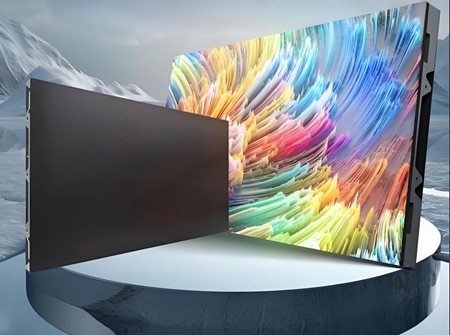
MIP packaging technology can greatly reduce the manufacturing difficulty of Micro LED displays. With capacity expansion and technological innovation, Micro LED displays will move faster from expensive customized products to standardized mass-produced products, promoting the rapid growth of the P1.0 and below micro-pitch market.
09 Global Layout
In 2025, the globalization pace of Chinese LED companies accelerated. Local brands can respond to local market demands more quickly, reduce logistics and tariff costs, and avoid potential trade risks simultaneously.
MLS established a factory in Mexico to the North American market, Aoyang Shunchang planned to invest 602 million yuan in building an LED project in Malaysia, and Leyard deeply Saudi Arabia, building one of the largest LED intelligent manufacturing bases in the Middle East.
Facing challenges such as global geopolitical changes, tariff barriers, and supply chain security, the strategy of building factories overseas will enhance the resilience and voice of China's optoelectronics industry in the global supply chain. This is an important step in the internationalization process of Chinese companies.
10 Capital Wave
In 2025, a wave for listing in Hong Kong emerged in the LED industry. Companies like Shiyuan, Dongshan Precision, and Han's CNC from the LED-related industry chain successively submitted applications or started planning for listing on the Hong Kong Stock Exchange. Against the backdrop of tightened A-share IPO policies, the Hong Kong Stock Exchange has become an important window for LED companies to connect with international capital and seek financing breakthroughs. This wave of listings will inject new liquidity into the LED industry. As more companies grow stronger through mergers and acquisitions, international investors will have more opportunities to share the dividends of China's LED industry upgrade, promoting the industry to develop at a higher level.
From panel giants heavily investing in MLED production lines to domestic automotive LED companies riding the wind and acquiring international brands; from the first year of Micro LED display for AR glasses to LED companiesentering the optical communication track.
The LED industry landscape in 2025 is undergoing a silent yet profound restructuring. Technological boundaries continue to expand, application scenarios extend from cinema screens to outdoor wearables, and the capital landscape expands from A-shares to Hong Kong stocks.
When RGB-Mini LED TVs redefine home audio-visual standards, and when Chinese LED manufacturing bases rise from the ground in Mexico, Malaysia, and the Middle East, a new global optoelectronics industry order led by Chinese enterprises has quietly taken shape.

Free Installation
Training

365-Day Whole
Machine Warranty

After-Sales
Service Network

Wechat official account


 CN
CN